


Abstract · This article provides a detailed technical examination of the Welded Steel Support, exploring its structural design, material specifications, and critical role in deep foundation excavation and underground construction. The discussion covers welding technology, load distribution mechanisms, customization capabilities, and the engineering considerations that ensure lateral soil pressure resistance and structural safety.
01. Structural Design and Load-Bearing Principles
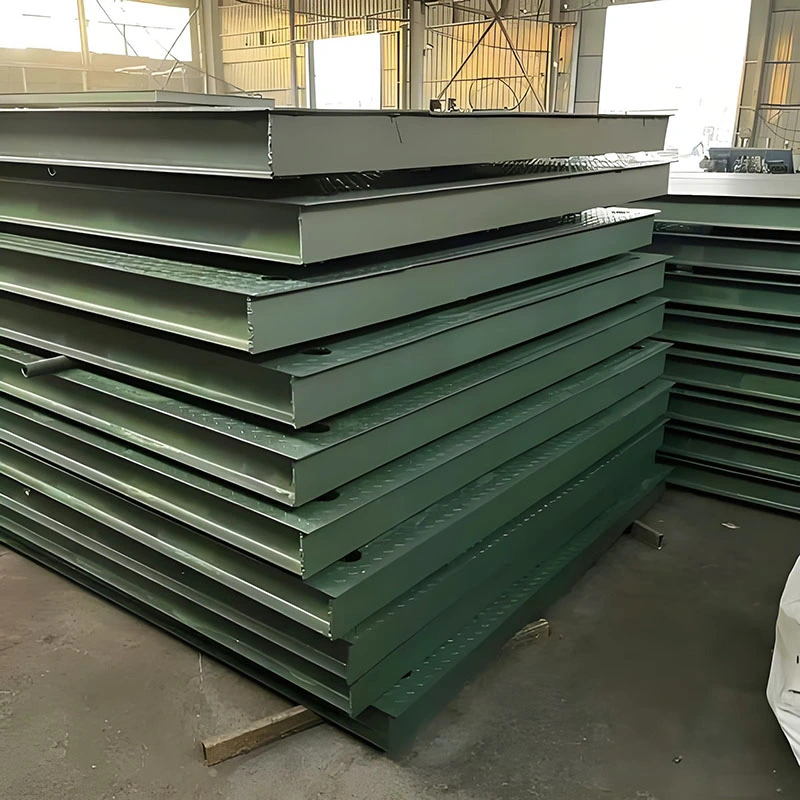
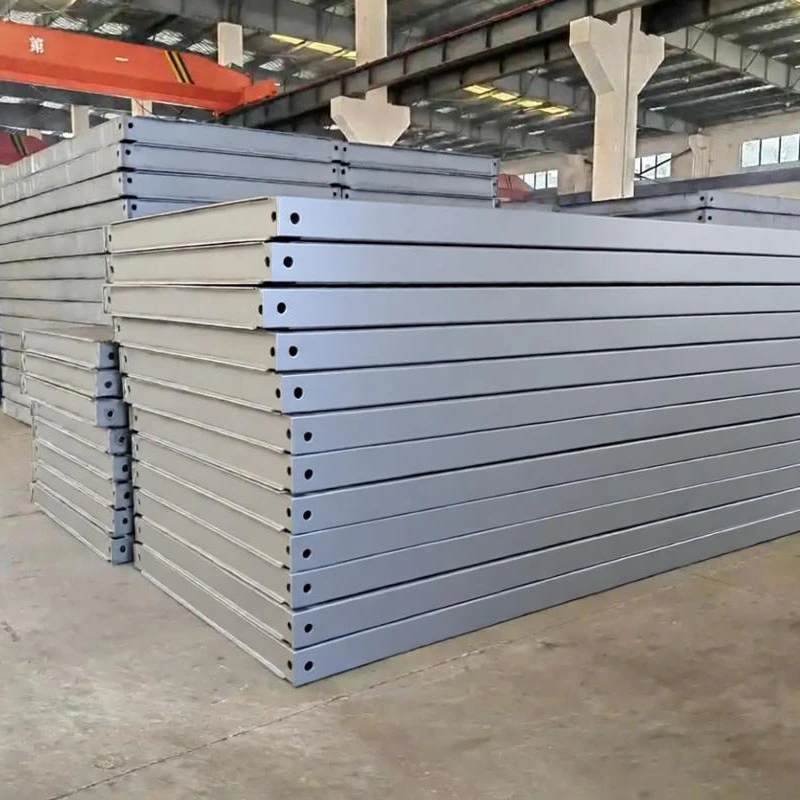
A Welded Steel Support is an engineered structural component fabricated by welding steel shapes into a load-bearing member for foundation pit and underground engineering projects. It functions as a horizontal strut that resists lateral soil pressure and transfers loads to the retaining wall system.
The support is designed to work in conjunction with steel walers, hanging plates, and rakers to form a complete shoring system. Its primary role is to prevent wall deformation and collapse during excavation by providing a stiff, reliable reaction point. The welded steel support is engineered for high axial compression loads, with full-penetration welds and ground-smooth joints ensuring that the component performs as a unified structural element rather than a collection of separate parts.
Resist lateral soil pressure and transfer loads
Works with walers, hanging plates, and rakers
High structural integrity and axial load capacity
02. Welding Technology and Structural Integrity
Ensure the weld achieves the full strength of the base metal
Eliminate stress concentrations at weld transitions
Non-destructive testing before dispatch ensures weld quality
Controlled welding processes reduce wear during repeated reuse
The structural integrity of the Welded Steel Support is fundamentally dependent on the quality of its welds. The manufacturing process employs professional assembly and welding techniques to achieve full-penetration welds that develop the full strength of the connected steel shapes. Ground-smooth joints minimize stress concentrations that could initiate cracks under cyclic loading. Weld flaw detection is conducted before the product leaves the factory, verifying that no substandard components reach the construction site.
Integrity Note: When the support is used within its design load limits, the welds will not crack. Operation under overload conditions is strictly prohibited, as this can compromise the structural integrity of the support and endanger the excavation.
03. Material Specifications and National Standards
The Welded Steel Support is manufactured from engineering-grade section steel in compliance with national standards, ensuring consistent mechanical properties and reliability.
| Parameter | Specification | Significance |
|---|---|---|
| Main Material | Engineering section steel | High strength and durability |
| Manufacturing Standard | National Standard of China | Consistent quality and performance |
| Processing Technology | Cutting, assembly, and welding | Precision and structural integrity |
| Standard Length | 1–12 m, custom available | Flexibility for different pit sizes |
| Section Specification | Customized per stress requirements | Optimized load capacity |
| Working Environment | High and low temperature conditions | Suitable for diverse climates |
Based on manufacturer specifications for welded steel supports.
The use of national-standard steel ensures that the material properties are predictable and that the support will perform as designed. The welding processes are strictly controlled to maintain the integrity of the steel and to produce welds that meet the required strength and toughness criteria.
04. Customization and Dimensional Flexibility
One of the key advantages of the Welded Steel Support is its customizability. Lengths and cross-sectional dimensions can be tailored to the specific requirements of each project, based on client drawings and structural calculations.
- Length Customization: Standard lengths range from 1 to 12 meters, with non-standard lengths available.
- Section Customization: Cross-sectional dimensions are produced according to the stress requirements of the project.
- System Integration: Supports can be supplied as complete systems with steel walers, hanging plates, and rakers.
- Project-Specific Solutions: Tailored for standard building foundation pits, subway tunnels, and bridge pile caps.
- Compatibility: Designed to work with various excavation methods and shoring configurations.
This flexibility allows engineers to optimize the shoring design for the specific soil conditions, excavation depth, and structural loads of each project.
05. Installation, Dismantling, and Reusability
The modular design of the Welded Steel Support facilitates rapid on-site assembly, shortening the setup period and improving overall construction efficiency.
- Modular Assembly: Components are designed to be easily assembled on-site with compatible connectors.
- Simple Dismantling: The supports can be disassembled and reused on subsequent projects.
- Reusability: Provided the working conditions are normal and there is no severe deformation, the supports can be reused.
- Inspection Before Reuse: Weld and component inspection is recommended before each reuse.
- On-Site Guidance: Technical support personnel can be dispatched to the project site to assist with installation.
The ability to reuse the supports reduces material consumption and contributes to the sustainability of construction projects.
06. Application Domains and Environmental Adaptability
The Welded Steel Support is used in a wide range of underground engineering applications.
- Subway Foundation Pits: Provides lateral support for deep excavation walls in metro construction.
- Building Construction: Supports deep foundation pits for high-rise buildings.
- Municipal Excavation: Used in utility trenches and underground infrastructure projects.
- Bridge Pile Caps: Supports excavation for bridge foundations.
- Underground Tunnels: Provides structural support during tunnel construction.
- High and Low Temperature Environments: Performance remains unaffected by ambient temperatures.
The supports are suitable for diverse operating environments, from open-air pits to enclosed underground tunnels, and can withstand varied regional conditions such as heavy rainfall or low temperatures.
Frequently Asked Questions
Product specifications and availability may vary. Always consult the manufacturer's documentation for your specific application requirements.