The landscape of industrial manufacturing is undergoing a seismic shift. In the realm of heavy-duty metal fabrication, where thickness, precision, and throughput are non-negotiable, traditional methods are increasingly being supplanted by a more advanced, efficient, and versatile technology: high-power laser cutting. For decades, our factory has been at the forefront of metal processing, and we have witnessed firsthand this transformative evolution. The question is no longer if fabricators will adopt high-power lasers, but how quickly they can integrate them to remain competitive. This technology is no longer a luxury; it's the new benchmark for capability, quality, and efficiency in handling demanding projects. At Tianjin Shenghui Metal Products Co., Ltd., our investment in state-of-the-art high-power laser cutting systems is a core part of our commitment to delivering unmatched value to our clients in mining, construction, energy, and heavy machinery sectors.
Table of Contents
What is High-Power Laser Cutting and How Does It Differ from Traditional Methods?
High-power laser cutting, in the context of industrial fabrication, typically refers to systems operating at 6 kW and above, with machines now routinely reaching 15 kW, 20 kW, and even 30 kW. At its core, it is a thermal separation process where a focused, high-energy density laser beam melts, burns, or vaporizes material along a programmed path, assisted by a high-pressure gas jet to eject the molten material and create a clean kerf. Our factory utilizes fiber laser technology, where the laser beam is generated in an active fiber and delivered via a flexible fiber cable to the cutting head. This offers superior electrical efficiency, beam quality, and reliability compared to older CO2 laser systems.
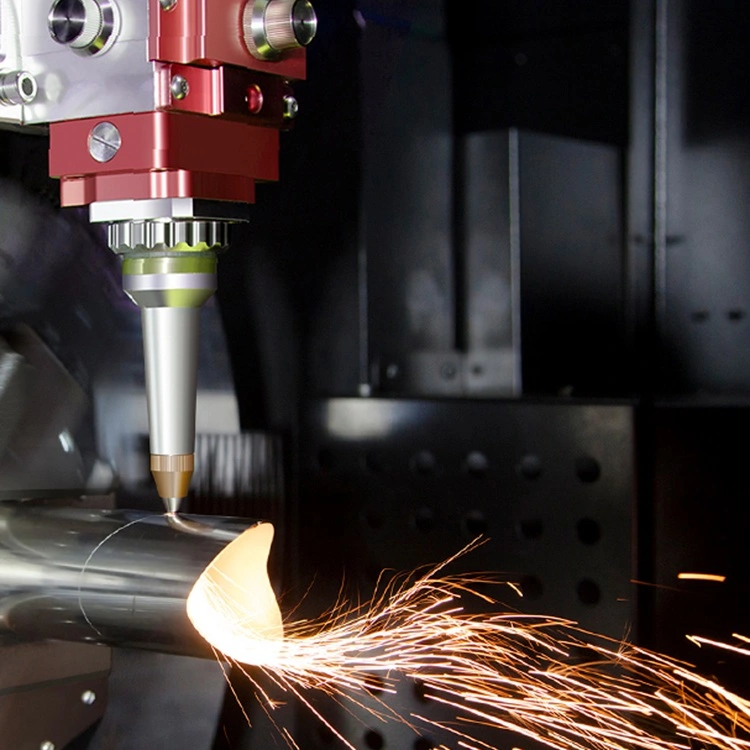
The fundamental difference from traditional heavy-duty cutting methods is profound. Let's contrast it with plasma and oxy-fuel cutting:
-
Precision and Heat-Affected Zone (HAZ): Plasma and oxy-fuel cutting are high-heat processes that create a large HAZ, leading to significant material distortion, edge hardening, and a wide kerf. Our high-power laser cutting produces an exceptionally small, focused heat input. This results in a minimal HAZ, virtually no thermal distortion on the remaining material, and a narrow kerf that allows for intricate contours and tighter nesting of parts, drastically improving material utilization.
-
Cut Quality and Finishing: Traditional methods often leave behind a beveled edge, dross (re-solidified slag), and an oxidized layer requiring extensive secondary grinding or machining. A key advantage we champion in our process is the laser's ability to deliver a square, smooth, and often "ready-to-weld" cut edge. This reduces or eliminates post-processing time and cost, a critical factor in heavy fabrication where manual finishing is labor-intensive.
-
Versatility and Automation: While plasma struggles with reflective materials like aluminum and brass, and oxy-fuel is limited to ferrous metals, high-power fiber lasers can cut a vast range of materials—from mild steel and stainless steel to aluminum, copper, and brass—without changing the gas source for the laser generation itself. Furthermore, laser cutting integrates seamlessly with modern CNC controls and automated material handling systems. Our production floor features automated loading and unloading, allowing for uninterrupted, lights-out operation, which is a game-changer for large-volume, heavy-plate projects.
-
Speed and Operational Cost: For thin to medium plates, laser cutting is significantly faster. For very thick plates (e.g., over 30mm), the raw cutting speed might be comparable to plasma, but when you factor in the superior edge quality eliminating secondary work, the total job time is often lower. The operational costs present a nuanced picture. While the initial capital investment is higher, the consumable costs (laser gases vs. plasma electrodes and nozzles) and electrical efficiency of fiber lasers lead to a lower cost-per-meter of cut in most production scenarios, especially when considering the holistic production workflow.
In our experience at Tianjin Shenghui Metal Products Co., Ltd., the shift wasn't just about buying a new machine. It represented a strategic overhaul of our entire fabrication philosophy, prioritizing precision from the first cut to minimize downstream bottlenecks and maximize overall project efficiency.
Why is High-Power Laser Cutting Technically and Economically Essential for Heavy-Duty Work?
The essential nature of high-power laser cutting for heavy-duty fabrication is rooted in a convergence of technical advantages that translate directly into economic benefits. It solves persistent industry pain points.
Technical Imperatives:
-
Cutting Through Thick Sections: Power is paramount. With our high-power lasers (15kW+), we can consistently cut through mild steel up to 50mm and beyond with high quality. The increased power allows for higher feed rates even at these thicknesses, maintaining productivity. This capability is essential for components in structural frames, shipbuilding, and mining equipment.
-
Managing Heat Input for Structural Integrity: Heavy fabrications often involve critical welds near cut edges. The large HAZ from plasma can compromise the parent metal properties, requiring extra steps. The laser's low heat input preserves the metallurgical integrity of the base material, ensuring stronger, more predictable welds and reducing the risk of distortion in assembled structures. This reliability is a cornerstone of our quality assurance at our factory.
-
Complexity Without Compromise: Heavy-duty doesn't mean simple. Components often require complex cutouts, internal contours, and precision holes for bolts and hydraulics. Laser cutting, guided by advanced CAD/CAM software, executes these complex geometries with the same ease as a straight line, something that is incredibly time-consuming and costly with traditional methods.
-
Repeatability and Digital Integration: Every part is a perfect digital replica of the first. This level of repeatability is impossible to achieve manually and difficult even with manual CNC plasma. It ensures interchangeability in assembly, which is vital for large-scale projects and maintenance part replacement.
Economic Necessities:
-
Reducing Total Cost of Ownership (TCO): While the upfront cost is higher, the TCO is favorable. Savings manifest in:
-
Material Savings: Enhanced nesting software combined with a narrow kerf can improve material yield by 2-8%, a massive saving on expensive heavy plate.
-
Labor Cost Reduction: Automation reduces direct operator time per part. More importantly, the reduction or elimination of secondary finishing (grinding, milling) represents the most significant labor saving.
-
Consumable and Energy Efficiency: Fiber lasers have wall-plug efficiencies over 40%, far surpassing CO2 lasers or the constant gas consumption of oxy-fuel.
-
Enabling New Business Models: The speed and flexibility of our laser cutting services allow us to respond to urgent requests and short-run projects profitably. It makes just-in-time manufacturing more feasible for heavy components, reducing client inventory costs.
-
Quality as a Economic Driver: Delivering components that fit perfectly the first time eliminates costly rework and delays on the client's assembly line. This reliability builds long-term partnerships and reduces hidden costs for our clients, making our service from Tianjin Shenghui Metal Products Co., Ltd. a value-driven choice, not just a cost item.
The economic argument is clear: high-power laser cutting transforms a cost center (cutting and preparation) into a strategic advantage, enabling fabricators to bid more competitively on complex projects while protecting their profit margins.
What Key Parameters in High-Power Laser Cutting Machines Matter Most?
Selecting and operating a high-power laser cutting system is not just about the wattage. Understanding the interplay of key parameters is what allows a factory like ours to optimize performance for heavy-duty materials. Here, we detail the critical specs that define our capability.
|
Parameter
|
Typical Range for Heavy-Duty
|
Impact on Fabrication & Our Implementation
|
|
Laser Power
|
6 kW to 30 kW+
|
Dictates maximum thickness and cutting speed. Our primary production machines are 15kW and 20kW, offering the optimal balance for cutting 25-50mm steel at high speeds while maintaining edge quality. Power directly influences our throughput.
|
|
Beam Quality (BPP)
|
< 2 mm*mrad (lower is better)
|
Perhaps more critical than raw power. A low Beam Parameter Product means a tighter, more focused beam. This allows for finer cuts, smaller kerfs, and the ability to cut thicker materials with given power. It is the secret to our high-quality edges on thick plate.
|
|
Cutting Bed Size & Capacity
|
Often 6m x 2.5m or larger; 20-40 Ton load capacity
|
Defines the size and weight of plate we can process. Our systems are designed for full-size heavy plates, with robust support structures to prevent sagging during cutting, ensuring accuracy across the entire bed.
|
|
Linear Drive & Positioning Accuracy
|
Positioning Accuracy: ±0.05mm/m, Repeatability: ±0.03mm
|
Ensures dimensional precision over large, heavy parts. High-performance linear drives and rigid machine construction maintain this accuracy even under fast accelerations and the weight of thick material, which is fundamental to our part consistency.
|
|
Assist Gas System & Pressure
|
High-Pressure Oxygen (for thick steel up to 500 psi), Nitrogen (for high-quality edges)
|
The gas chemistry and pressure are crucial for process control. For thick-section cutting, we use high-purity oxygen to create an exothermic reaction that boosts energy input. For stainless steel and aluminum, high-pressure nitrogen (up to 25 bar) yields clean, oxide-free edges. Our systems have robust gas delivery to maintain consistent pressure.
|
|
Nozzle Technology & Cutting Heads
|
Automatic nozzle changers, capacitive height sensors
|
Automation is key for uptime. Our heads feature automatic nozzle cleaning and changing, maintaining optimal cut conditions. Advanced height sensors maintain a precise stand-off distance, even over warped or uneven plates—a common challenge in heavy fabrication.
|
|
Control System & Software
|
Advanced CNC with Material Database
|
The brain of the operation. Our systems use sophisticated software with pre-optimized parameters for thousands of material-thickness-power combinations. This allows our operators to focus on nesting and workflow, not manual parameter guessing, ensuring optimal results from the first cut.
|
In our daily operations at Tianjin Shenghui Metal Products Co., Ltd., we don't just rely on these parameters as static numbers. We continuously fine-tune them through our process expertise. For instance, optimizing gas pressure and cutting speed for a specific batch of 40mm AR400 abrasion-resistant steel is an application of our deep knowledge, ensuring we deliver parts that meet the toughest wear-resistant specifications. This technical mastery, built into every laser cutting job, is what differentiates our factory.
How Are High-Power Laser Cutting Applications Creating Tangible Benefits?
The proof of high-power laser cutting's essential role is in the real-world applications across heavy industries. Let's examine specific use cases where our capabilities deliver measurable outcomes.
Mining and Earthmoving Equipment:
-
Components: Bucket teeth adapters, track links, chassis sections, wear plates, structural supports.
-
Benefits Realized: These parts demand extreme durability. Laser cutting allows for precise profiling of Hardox and other wear steels with minimal heat input, preventing early cracking or failure. The accuracy ensures perfect fit-up for subsequent hardfacing or welding, extending component life. For a recent project, our laser cutting of complex wear plate contours reduced the client's assembly time by 15% due to the elimination of fit-up grinding.
Construction and Structural Steel:
-
Components: Connection plates, gussets, beam end details, customized brackets, architectural elements.
-
Benefits Realized: Speed and accuracy are king. High-power lasers can rapidly process thick connection plates with multiple bolt holes and complex shapes. The precision ensures that holes align perfectly in the field, eliminating costly reaming or field modifications. Our nesting software minimizes scrap from these typically smaller but numerous parts, directly improving project margins for our clients.
Heavy Transport and Agricultural Machinery:
-
Components: Frame rails, axle supports, cabin structures, harvester blades, gearbox housings.
-
Benefits Realized: These applications mix thick materials with complex geometries. Laser cutting handles both seamlessly. The ability to cut clean holes for hydraulic lines directly into thick frame members, ready for welding, streamlines the entire fabrication pipeline. The consistency of our laser cutting means every part in a production run is identical, crucial for assembly line manufacturing.
Energy and Infrastructure:
-
Components: Wind turbine parts (flanges, brackets), pressure vessel segments, structural nodes for bridges, power generation housing.
-
Benefits Realized: Here, quality and certification are paramount. The clean, dross-free edges from laser cutting provide an excellent weld preparation surface, leading to higher-integrity welds that can pass rigorous x-ray or ultrasonic testing. The digital traceability of CNC laser cutting—where every cut is from a certified drawing—supports the stringent documentation required in these sectors.
Across all these applications, the tangible benefits we observe and deliver for our partners include: Reduced Lead Times (faster cutting + less secondary work), Enhanced Design FreedomLower Total Project Cost (through material savings and labor reduction), and Improved Product Performance (through better-fitting components with superior edge integrity). Every day in our factory, we see how high-power laser cutting transforms ambitious designs into reliable, heavy-duty reality for Tianjin Shenghui Metal Products Co., Ltd. and our clients.
What Does the Future Hold for Laser Cutting in Heavy Fabrication?
The evolution is far from over. The trajectory points towards even greater integration, intelligence, and capability, solidifying laser cutting's central role.
-
Power Increases and Process Refinement: Laser powers will continue to climb, making 50mm+ steel cutting at high speeds more routine. However, the focus will shift to "smart power" management—dynamically adjusting power, frequency, and beam mode during a cut to optimize for different features (e.g., high speed on thin webs, high power on thick walls) within a single part, further improving cycle times and edge quality.
-
Hyper-Automation and Lights-Out Factories: The integration of laser cutting with upstream and downstream processes will deepen. We envision fully automated lines where raw plate is stored, retrieved, laser-cut, sorted, and then transported to robotic welding cells—all with minimal human intervention. Our investment in automation is a step towards this future, maximizing the utilization of our high-power laser cutting assets 24/7.
-
AI and Predictive Process Control: Artificial Intelligence will move from concept to standard tool. Machine learning algorithms will analyze sensor data (back-reflection, melt pool monitoring) in real-time to predict and correct for defects like dross formation or piercing errors before they happen, guaranteeing first-part correctness and reducing scrap on expensive materials.
-
Hybrid Manufacturing: The line between subtractive (cutting) and additive (building up) manufacturing will blur. Laser cutting heads will be integrated with laser metal deposition (LMD) heads on the same machine. This allows for cutting a part from plate and then adding complex features or wear-resistant cladding in a single setup, opening new possibilities for repair and complex part creation.
-
Sustainability Drive: The inherent efficiency of fiber lasers will be a major asset. The reduction in material waste through optimal nesting, the lower energy consumption per part, and the elimination of many chemical cleaning processes associated with other cutting methods position laser cutting as the greener choice. This aligns with the growing demand for sustainable manufacturing practices across our industry.
For a forward-looking manufacturer like Tianjin Shenghui Metal Products Co., Ltd., staying abreast of these trends is part of our DNA. Our commitment is to not just adopt technology, but to understand and leverage it to solve our clients' future challenges today. The future of heavy-duty fabrication is digital, automated, and laser-focused, and our factory is being built to lead that future.
Conclusion
The evidence is overwhelming. High-power laser cutting has transitioned from an advanced alternative to an essential, core technology for any serious heavy-duty metal fabricator. It addresses the critical triad of modern manufacturing demands: higher quality, lower cost, and shorter time-to-market. The technical ability to cut thick materials with precision, minimal heat input, and exceptional edge quality, combined with the economic benefits of reduced labor, material savings, and process integration, creates an undeniable competitive advantage.
At Tianjin Shenghui Metal Products Co., Ltd., we have made this technology the cornerstone of our production. Our expertise isn't just in owning the machines; it's in mastering the process parameters, integrating them with our broader fabrication workflow, and applying this capability to solve complex challenges for our clients in the most demanding sectors.
If your projects involve heavy plate, complex geometries, and a need for reliable, high-quality components, partnering with a fabricator equipped with advanced high-power laser cutting is no longer optional—it's essential. We invite you to evaluate the total cost and timeline of your next project, considering the holistic savings that our approach can deliver.
Ready to experience the precision and efficiency of high-power laser cutting on your heavy-duty fabrication needs? Contact our engineering team at Tianjin Shenghui Metal Products Co., Ltd. today for a consultation. Share your drawings or specifications, and let us provide a detailed analysis of how our laser cutting capabilities can optimize your design, reduce your costs, and accelerate your project timeline.
Frequently Asked Questions (FAQ)
Why Is High-Power Laser Cutting Becoming Essential for Heavy-Duty Metal Fabrication?
Question1: What is the main reason heavy-duty fabricators are switching to high-power laser cutting over plasma?
Answer: The primary driver is the total cost and quality advantage. While plasma has a lower initial machine cost, high-power laser cutting offers superior cut quality that often eliminates expensive secondary machining or grinding, provides much higher precision for complex parts, and allows for tighter material nesting to reduce waste. Over the entire project lifecycle—considering material yield, labor for finishing, and assembly fit-up—laser cutting proves more efficient and cost-effective for a wide range of heavy-duty applications.
Question2: How thick of a material can high-power lasers effectively cut for industrial applications?
Answer: Effective cutting thickness depends on material type, laser power, and desired edge quality. For mild steel, a 15 kW laser can cleanly cut up to about 25-30mm at high speeds and can process up to 40-50mm with appropriate parameters. With 20-30 kW lasers, that upper limit extends to 50-60mm and beyond. For stainless steel and aluminum, the maximum clean-cut thickness is typically less, but still substantial (e.g., 25-35mm with 20kW). It's crucial to consult with an expert, like our team, to match the power to your specific material mix.
Question3: Does the high heat from a laser warp thick metal plates?
Answer: Counterintuitively, high-power laser cutting creates *less* warping than plasma or oxy-fuel cutting for most thicknesses. This is because the heat input is highly concentrated and moves quickly. The localized area heats and cools rapidly, minimizing the spread of heat into the surrounding material (the Heat-Affected Zone). This is a key advantage, as it preserves the flatness of the remaining plate and the geometry of the cut part, reducing post-cut straightening work.
Question4: Is laser cutting economical for small-batch or one-off heavy parts, or only for mass production?
Answer: It is exceptionally economical for small batches and prototypes. The setup is purely digital—loading a CAD file—with no physical tooling or templates required. This means there is virtually no setup cost or time difference between cutting one part or one hundred. This flexibility makes it ideal for custom fabrications, prototyping, and maintenance/repair/operations (MRO) parts, allowing for cost-effective production of single, complex components.
Question5: What are the limitations or challenges of high-power laser cutting on very thick (e.g., 50mm+) structural steel?
Answer: On the extreme upper end of thickness, challenges include achieving a perfectly square kerf throughout the depth (taper can occur), managing the high assist gas pressure and consumption required, and maintaining cutting speed to prevent excessive melting. The cut edge may also have a slightly rougher finish compared to thinner cuts. For these extreme applications, the process requires meticulous parameter optimization by experienced technicians. Often, for the very thickest sections (e.g., over 60mm), a combination of processes—like laser cutting the profile and then machining the edge for a weld prep—might be the most efficient solution. We assess this on a case-by-case basis to ensure the best outcome.
 English
 Español
 Português
 русский
 Français
 日本語
 Deutsch
 tiếng Việt
 Italiano
 Nederlands
 ภาษาไทย
 Polski
 한국어
 Svenska
 magyar
 Malay
 বাংলা ভাষার
 Dansk
 Suomi
 हिन्दी
 Pilipino
 Türkçe
 Gaeilge
 العربية
 Indonesia
 Norsk
 تمل
 český
 ελληνικά
 український
 Javanese
 فارسی
 தமிழ்
 తెలుగు
 नेपाली
 Burmese
 български
 ລາວ
 Latine
 Қазақша
 Euskal
 Azərbaycan
 Slovenský jazyk
 Македонски
 Lietuvos
 Eesti Keel
 Română
 Slovenski
 मराठी
 Srpski језик